
Guides
Office cleaning checklist: daily, weekly and monthly tasks
Most office cleaning problems aren’t about effort. They’re about frequency: the fridge nobody owns, the restroom that’s fine Monday and not Thursday, the entry glass that only gets wiped when a client is due. This checklist sorts the work by how often it needs to happen, so you can hand it to a cleaner, run it as a rotation, or use it to check what you’re already paying for.
Why frequency matters more than a long list
A checklist with eighty items that all get done ‘regularly’ isn’t a plan. Cleaning is two kinds of work. The first is what people touch and use all day: restrooms, door handles, the coffee machine, the break-room table. That needs doing every visit. The second is what quietly builds up: vents, grout, the back of the fridge. That can wait a week, a month or a quarter, but it has to happen on a date, not ‘when we get to it’.
The rule we use: the more hands a surface sees, the more often it gets cleaned. Print the lists below and put real dates on the monthly and quarterly ones. A task without a date never happens.
Daily checklist
Every working day, or every cleaning visit if you’re cleaned less often than that.
Entry and reception
- Vacuum or sweep the entry and shake out or vacuum the mat
- Wipe door glass at hand height and the reception counter
- Straighten visitor seating; wipe shared pens, sign-in screens or tablets
Desks and workstations
- Empty desk-side bins
- Wipe shared desks and meeting tables
- Leave papers, monitors and personal items where they are
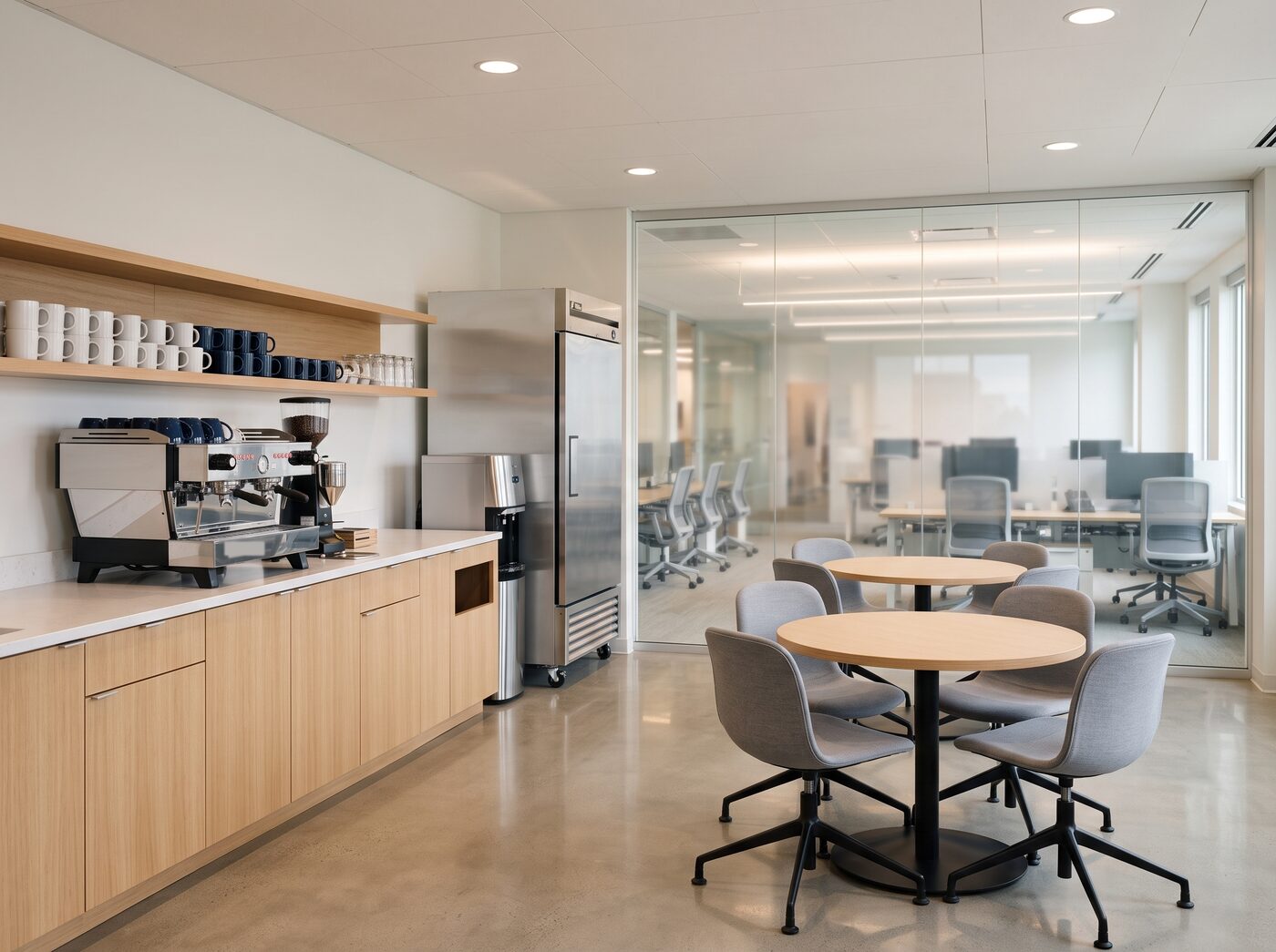
Kitchen and break room
- Wipe counters, tables and the sink; clean the faucet
- Wipe the microwave inside and the fridge and coffee machine outside
- Empty the bin and clear the dish rack
Restrooms
- Clean and disinfect toilets, urinals, sinks and counters
- Wipe mirrors, empty bins, mop the floor
- Restock soap, paper towels and toilet paper
Floors
- Vacuum carpet, starting with the walking lanes
- Sweep and damp-mop hard floors in the entry, break room and restrooms
Trash and recycling
- Empty every bin, replace liners, take bags out
- Break-room recycling and compost, if you use them
High-touch surfaces
- Disinfect door handles and push plates, light switches and keypads
- Wipe shared phones, the conference table and the fridge handle
Weekly checklist
The things that build up over days rather than hours.
Entry and reception
- Wipe all door glass and frames, not just the hand-height strip
- Dust the reception counter, shelving and brochure racks
- Vacuum under and around the entry mat
Desks and workstations
- Wipe clear desktops; dust monitor stands, shelves and window sills
- Wipe shared phones and keyboards
Kitchen and break room
- Wipe cabinet fronts and appliance exteriors
- Throw out old food from the fridge (pick a day, such as Friday)
- Run the coffee maker’s cleaning cycle
Restrooms
- Wipe dispensers, partitions and the walls beside toilets
- Clean behind and around the toilet base
- Wipe the floor edges and corners
Floors
- Vacuum edges and under desks
- Mop all hard floors thoroughly, not just the traffic lanes
Trash and recycling
- Wash any bin that is visibly grimy
- Check the recycling is sorted and the dumpster area is orderly
High-touch surfaces
- Wipe chair arms in meeting rooms, remotes and AV panels
- Wipe stair rails and shared appliance controls
Monthly checklist
The edges, the tops and the backs. Put a recurring date on the calendar.
Entry and reception
- Dust vents and light fixtures within reach
- Wipe baseboards and door frames
Desks and workstations
- Dust the tops of cabinets and shelving
- Vacuum upholstered chairs
Kitchen and break room
- Empty and wipe down the fridge, shelf by shelf
- Clean inside cabinets and behind small appliances
Restrooms
- Descale faucets and fixtures
- Wipe exhaust fan covers and partitions top to bottom
- Scrub grout at the toilet base
Floors
- Move chairs and vacuum underneath
- Spot-treat carpet stains
Trash and recycling
- Disinfect the inside of every bin
- Check the bins and liners still fit each other
High-touch surfaces
- Dust and wipe blinds
- Wipe switch plates and the tops of door frames
Quarterly or as needed
Lower-frequency work, and a few jobs that belong to a specialist rather than a regular cleaner.
Entry and reception
- Clean the inside faces of windows and glass partitions
- Dust the ceiling corners and air vents
Desks and workstations
- Wipe the fronts of file cabinets
- Ask everyone to clear their drawers once a year
Kitchen and break room
- Clean behind and under the fridge
- Descale the dishwasher; clean the microwave vent filter
Restrooms
- Deep-clean grout
- Wash walls and partitions; check the exhaust fan
Floors
- Carpet deep cleaning is a specialist job, once or twice a year
- Hard floors are stripped and waxed by a specialist once or twice a year, if they need it; book either for a weekend
Trash and recycling
- Replace worn or cracked bins
- Review whether you have enough bins where people actually work
High-touch surfaces
- Wipe light fixtures and diffusers
- Replace anything worn that people touch constantly, such as a handle or push plate
Adapting the list: small office or busy one
A small office of a handful of people can often run on two or three visits a week. Keep restrooms, the break room and trash on every visit, and move desk wipe-downs and baseboards to weekly. Start more often than you think you need, spot-check for a month, and drop back where the checks come up clean.
A busy office, or one with clients walking in daily, needs the daily list every working day. Add a midday restroom and break-room check by someone in-house, reset meeting rooms after big meetings, and treat the entry and reception area as non-negotiable: it’s the first thing visitors see. In a Portland winter, the entry mat and the first ten feet of floor do the work of the whole building, so give them extra attention.

If you’d like a number for your own space, you can request a quote. Smaller offices get a real number over one phone call.
How to tell whether your cleaning is actually happening
Walk the space once a week with this list:
- Run a finger along a shelf or door frame at head height
- Look at the floor behind and around the toilets
- Check the corners of the break-room floor and under the microwave
- Lift a bin liner: was the bag changed, or just the top one emptied?
- Look for soap and paper that you restocked yourself
- Check the entry glass at hand height and under the mat
- Look for last week’s stain, still there
Spot-checks work, but they cost you time and only catch what you happen to walk past. The better fix is a record. If your cleaner photographs the restrooms, break room and entry at the end of every visit and sends the photos over, you have a dated answer to ‘did it happen’ without anyone leaving their desk. That’s what we do after every visit, and it turns a checklist from an honor system into something you can check.
If you'd rather not run this list yourself
We’re Mark and Brett, and we clean offices around Portland. For each office we write one documented standard into the quote, based on a list like this one, so the result doesn’t depend on who shows up. Visits can be early, late or on weekends, and you get photos after every visit. If something’s off, tell us within 24 hours and we’ll come back and make it right — free.
See how our office cleaning works, what office cleaning costs, how pricing is set, or the rest of our commercial work. If you run a practice, our medical and therapy office cleaning page covers the extras for waiting and exam rooms.
Common questions
How often should an office be cleaned?
It depends on headcount and how many visitors you have. Many small offices do well with two or three visits a week, with restrooms and the break room done every visit. Offices with daily client traffic usually need cleaning every working day.
What’s the difference between regular and deep cleaning?
Regular cleaning keeps what people use every day in order: restrooms, kitchens, floors, trash. Deep tasks, like vents, grout and behind appliances, deal with buildup and belong on the weekly, monthly and quarterly lists above. A new schedule works well when it starts with a one-time reset, so later visits stay maintenance instead of catch-up.
Do cleaners clean the desks?
Usually they clean around what’s on them, never through it, so papers and personal items stay put. If you want a desktop wiped, clear it before the visit.